
KAMBIO
Creator:
John Feldmann
Curator's Note
Updated: August 2026
A mature city tree is infrastructure. It cools a street by several degrees, holds back stormwater, filters air and hosts more life than anything else on the block – and none of that can be replaced by a freshly planted sapling for another forty years. Yet whenever we are unsure about what is going on inside a trunk, we tend to decide against the tree. In tree care, caution usually means the saw.
Existing diagnostics either wound the very tree they are meant to protect, or take so long that they rarely happen at all. Kambio closes exactly that gap.
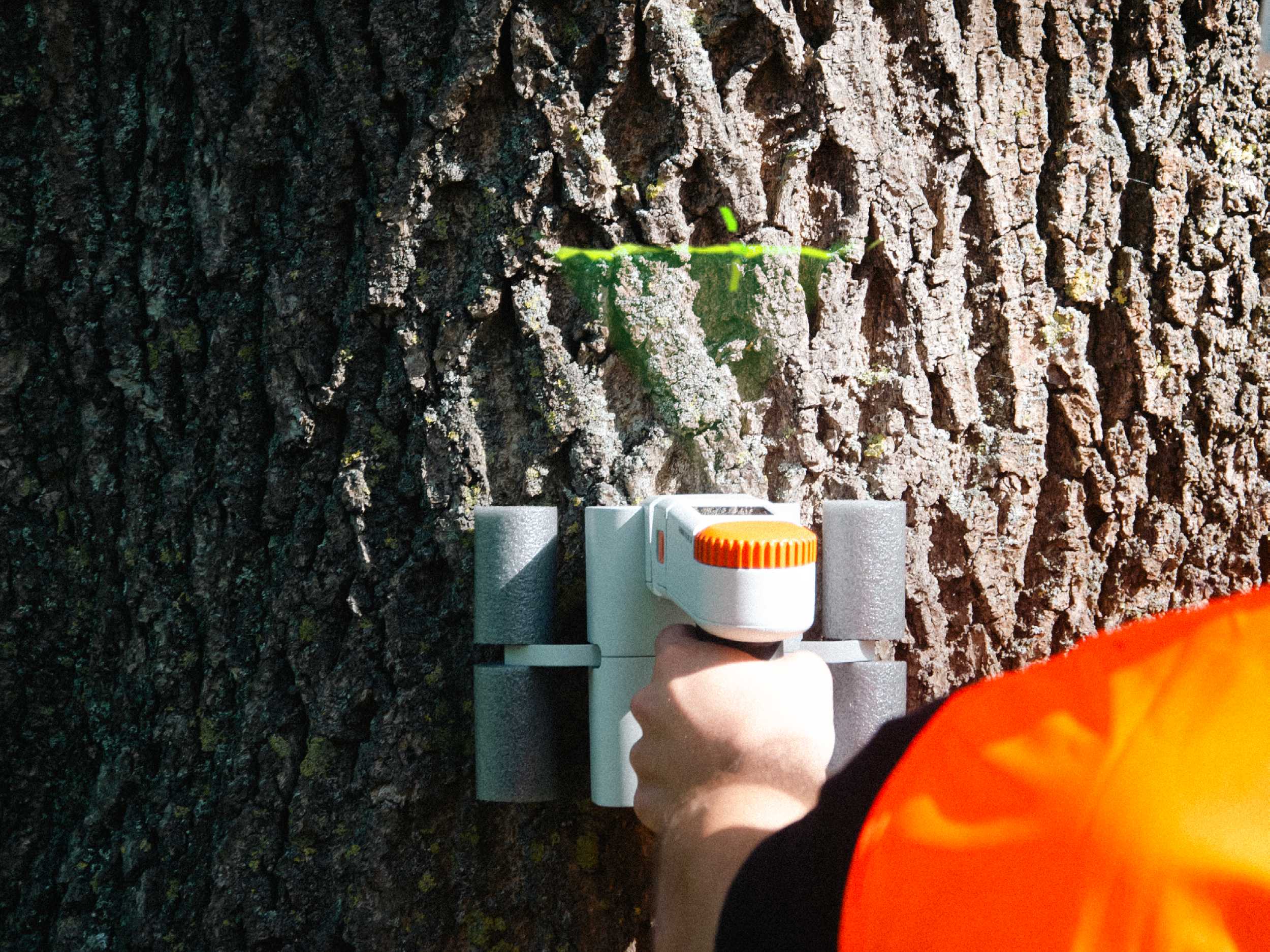
The laser line is a design move that turns a shaky hand-held into a steady, reproducible measurement device.
That is the shift worth showing here. KAMBIO does not make trees healthier, instead it makes it harder to remove a healthy one – and easier to act early on the one that needs help.
Abstract
Trees are an essential part of our cities. They provide shade, support biodiversity, improve air quality and contribute to climate resilience. At the same time, many trees are exposed to increasing environmental stress, making regular assessment and maintenance more important than ever.
Kambio is a design concept exploring non-invasive tree diagnostics using ground-penetrating radar (GPR). Although the technology already exists and shows potential for detecting internal damage, it is still not used in everyday tree inspection.
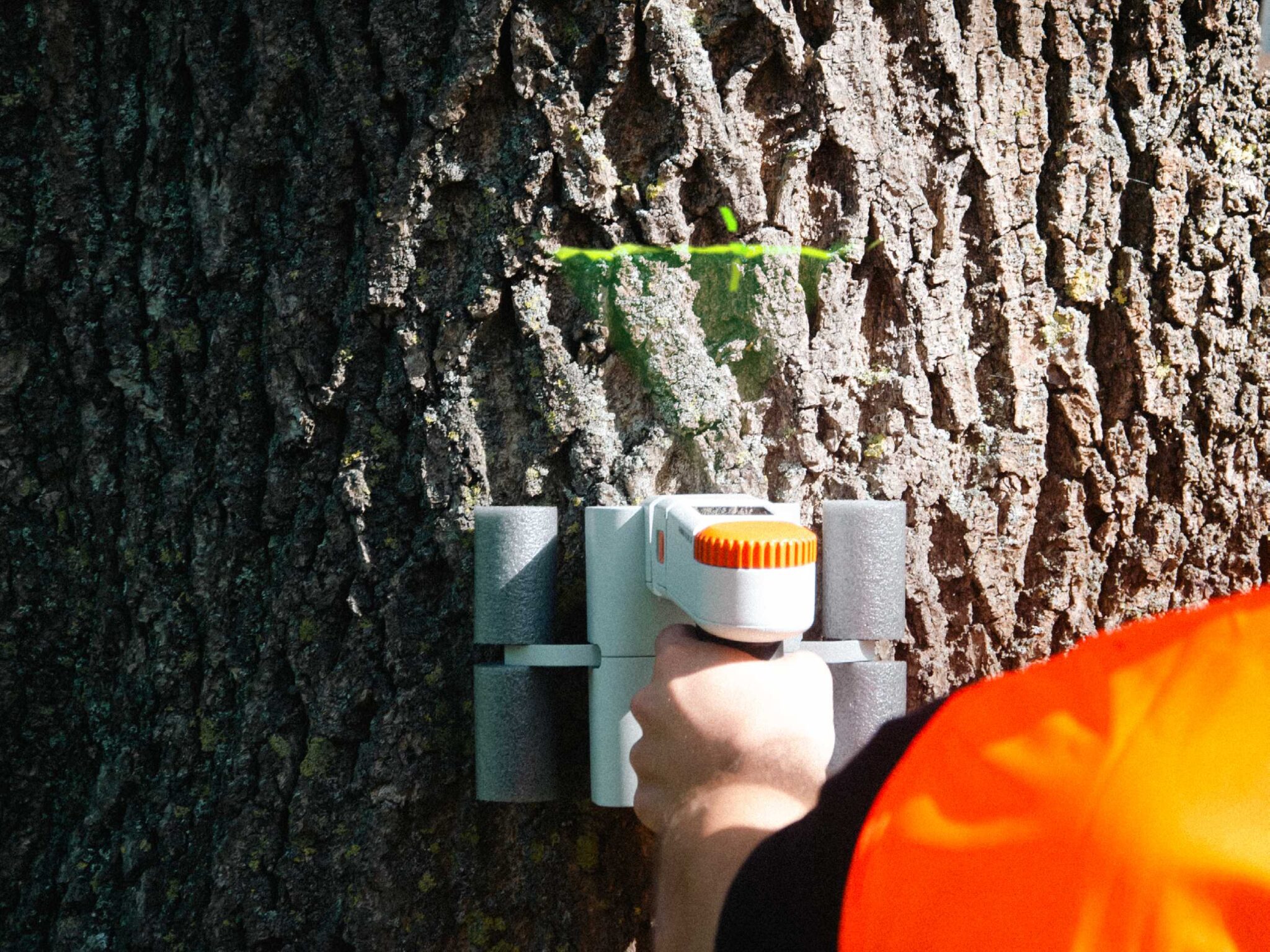
The project focuses on translating complex radar technology into an intuitive tool for everyday tree care. A key question was how to guide a scan around a circular, organic form such as a tree trunk while keeping the measurement consistent and controllable.
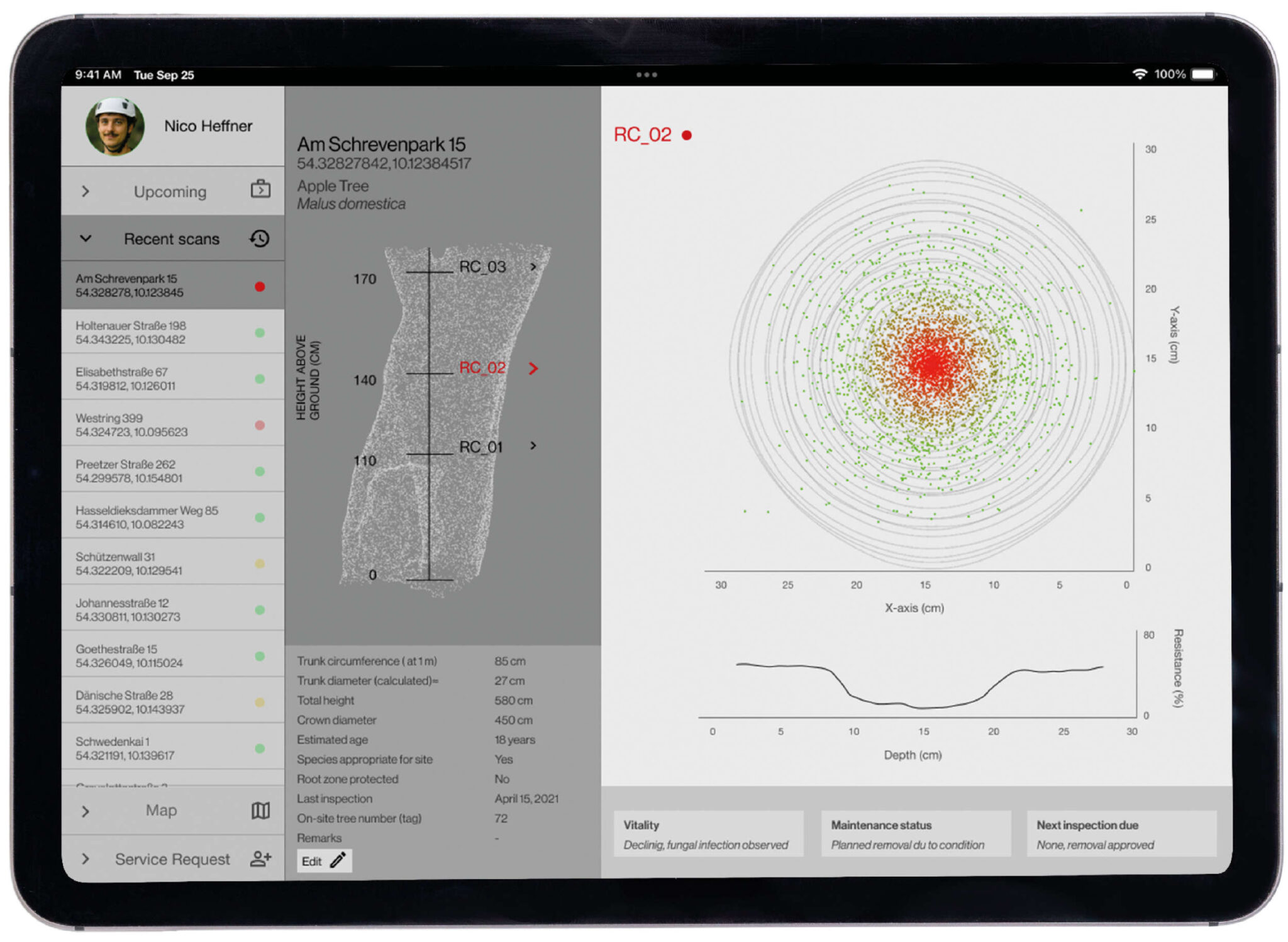
Positioning sensors and a visible laser line support the user in guiding Kambio along the trunk and enable reproducible measurement paths. The captured data is visualised, helping to make the condition of the tree easier to assess and document.
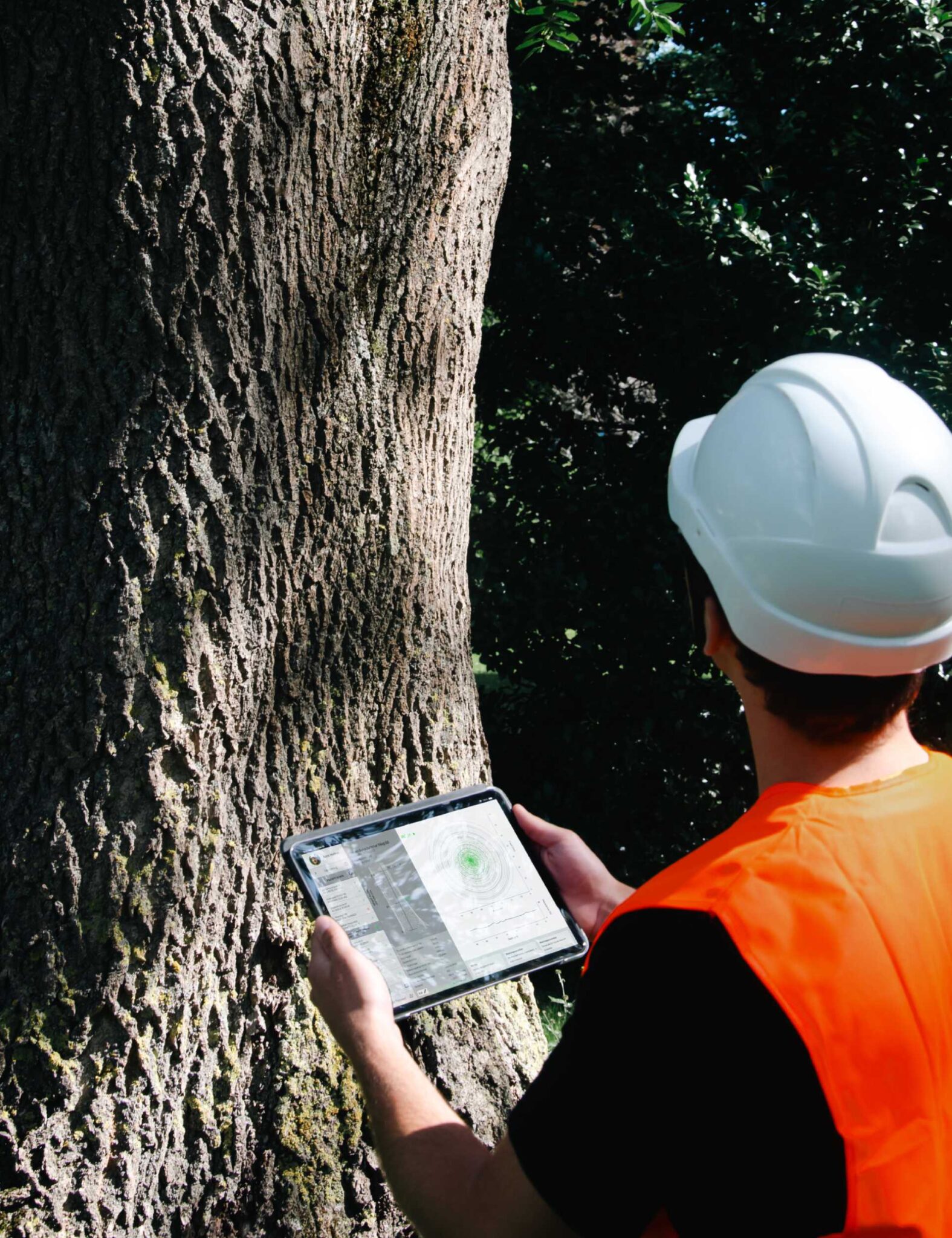
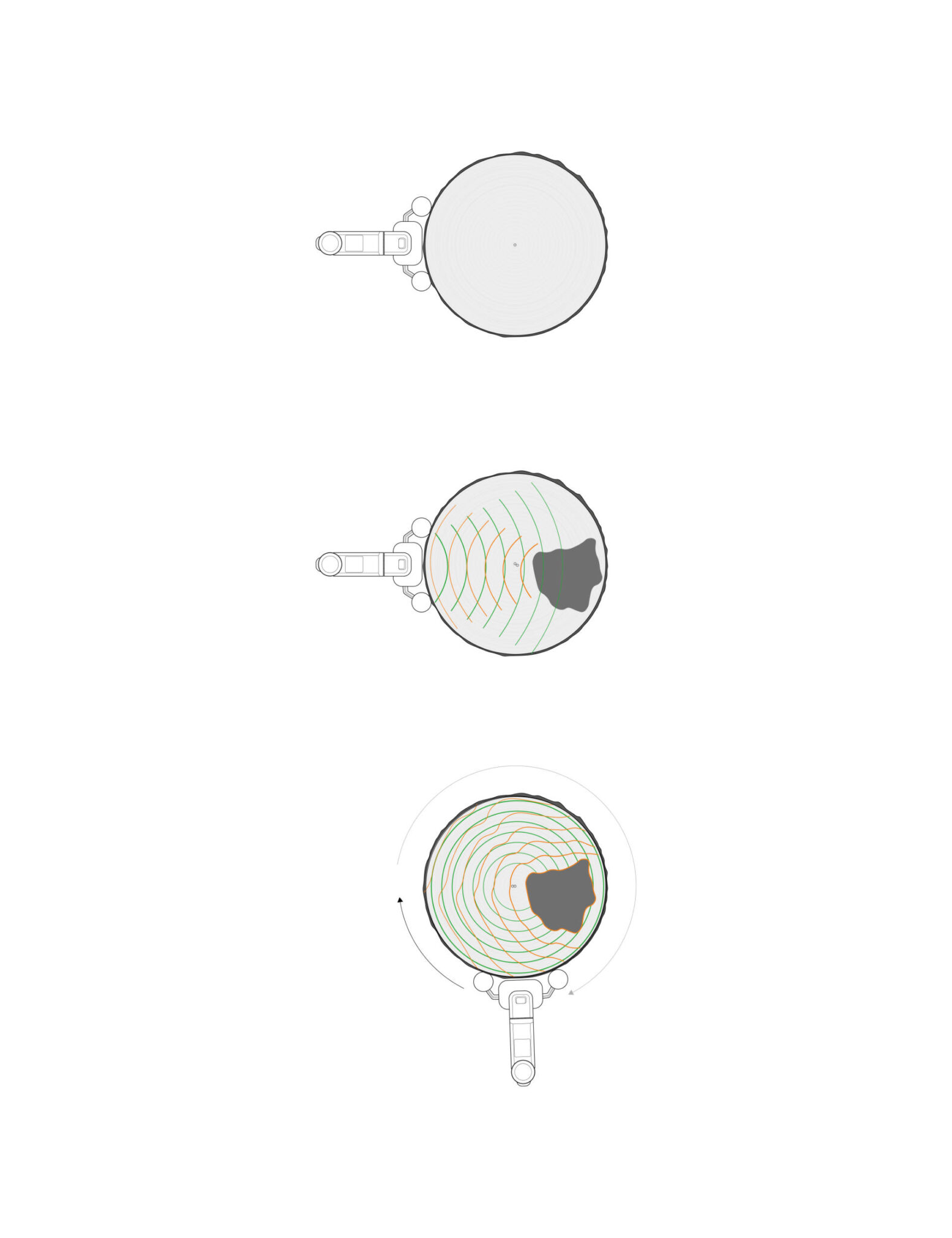
The form of Kambio is designed around the movement of the user. Its compact, hand-guided body supports stable contact with the trunk and allows the device to be used close to the body. An attachable extension makes it possible to reach higher or otherwise difficult-to-access areas.
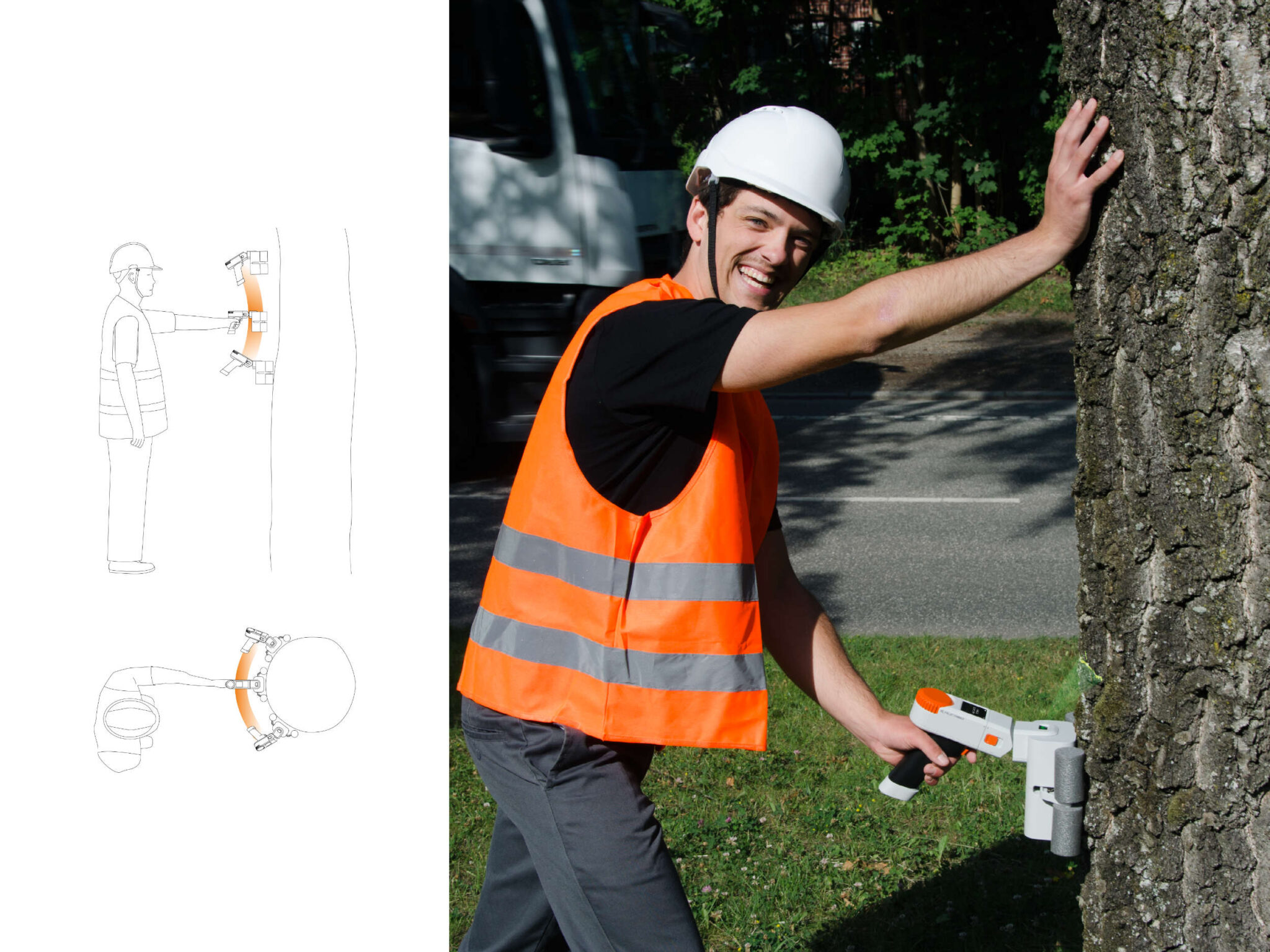
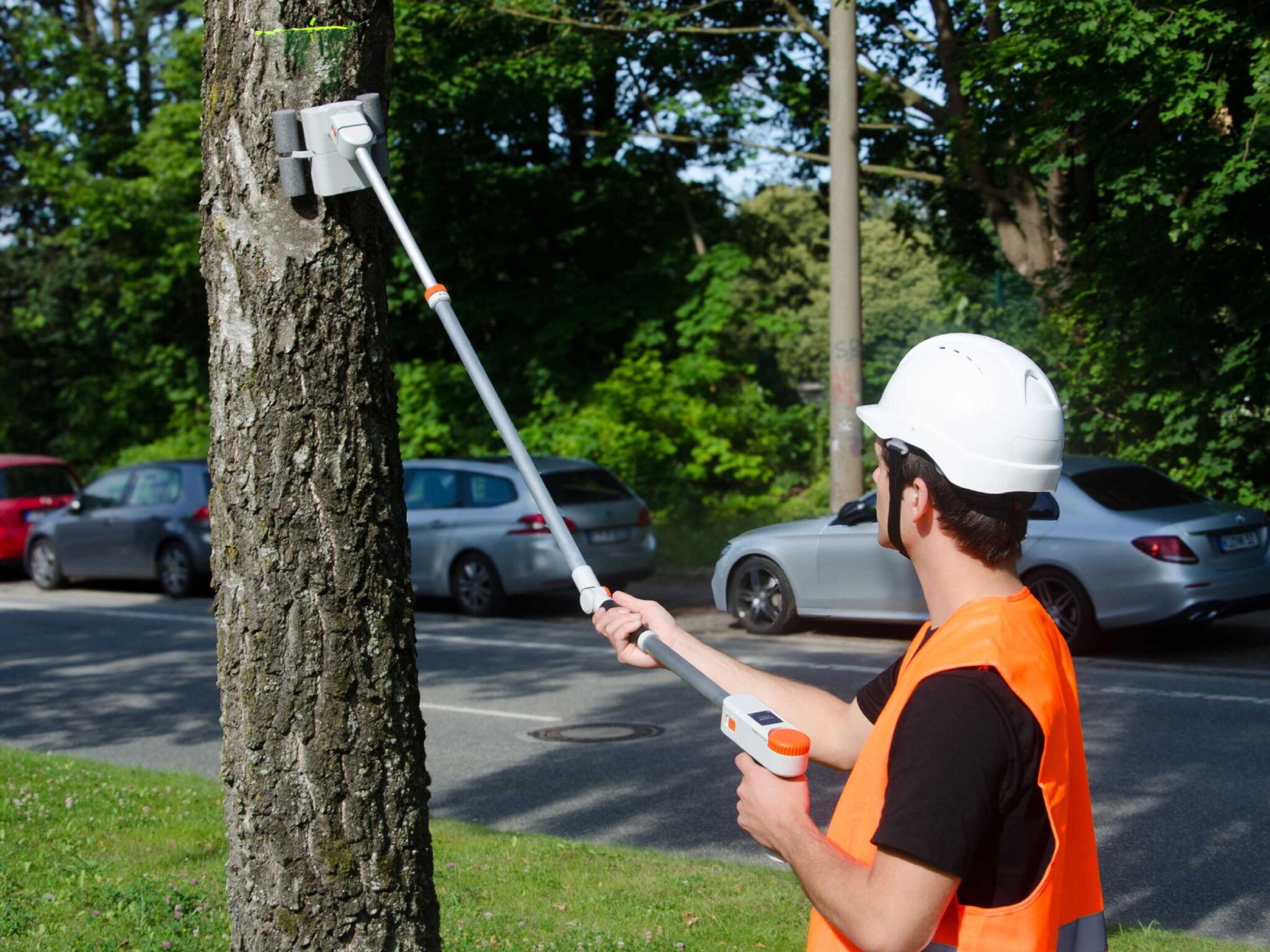
Internal decay and structural damage can remain hidden beneath the bark before they become visible from the outside. Kambio explores how non-invasive sensing can make these hidden conditions more accessible to tree inspectors without placing additional strain on the tree.
The resulting digital data can be documented and compared over time, creating a basis for more informed decisions in tree care. By supporting earlier detection and more precise assessment, Kambio aims to help plan interventions more accurately and contribute to the long-term preservation of urban trees.